
"Thy Will Be Done"
James McCune Smith's sorrowful editorial on Abraham Lincoln's assassination

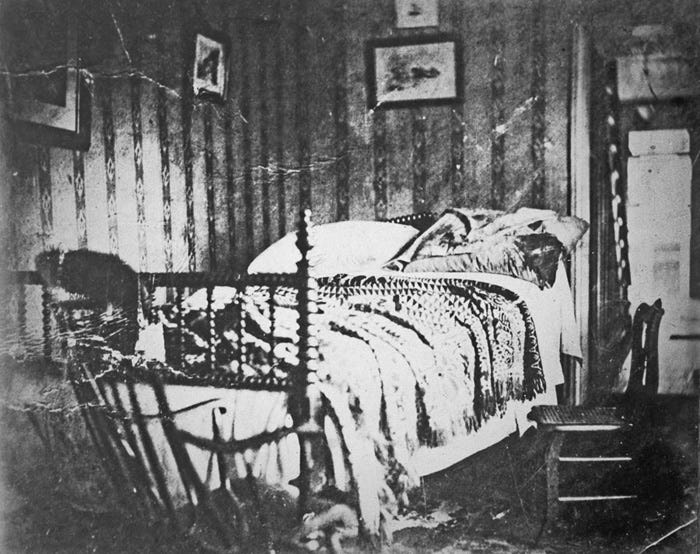
During his tenure of late October 1864-late May 1865 as lead editorial writer for the Anglo-African, James McCune Smith commented on the escalating developments of the Civil War. (Proprietor and lead editor Robert Hamilton was on another tour throughout the country to promote, fundraise, and report for the paper.) This editorial about the assassination of Abraham Lincoln was as sorrowful as McCune Smith’s previous ones about the fall of Richmond and General Robert E. Lee’s surrender to General Ulysses S. Grant were triumphant. McCune Smith turned once again to the Bible to find words to express his sentiments, and worried how the death of Lincoln would affect Reconstruction, the project of reconciliation and reintegration of the rebel slave states into the Union. While McCune Smith unabashedly admired Lincoln, he disagreed with him on many of his Reconstruction policies. Like the Radical Republicans, McCune Smith was more concerned with the plight of recently freed African Americans and Southern loyalists than he was with that of Confederates, especially the ringleaders and slaveholders, and wasn’t convinced by Lincoln’s belief that dealing generously with them would speed the process of national healing. In fact, he saw Lincoln’s murder as emblematic of Confederate intransigence and eagerness to plunge the nation into slavery and war again at the first opportunity. Still, McCune Smith believed that Lincoln was best fitted for steering the nation towards a successful Reconstruction – as he had been for steering the nation away from slavery – making his murder even more of a national calamity.
This is one of several editorials that’ll be published here at the World of James McCune Smith on the anniversaries of the Civil War-era events that they discuss.
~ This entry is part of my project of identifying, compiling, and editing the complete written and spoken works of James McCune Smith (1813-1865) in association with Northumbria University and funded by the British Academy. ~
Title: “Thy Will be Done”
Source: The Anglo-African, 22 April 1865, p. 2 (At Duke University Libraries)
Text:
“THY WILL BE DONE.” [1]
––––•––––
SINCE that cold night in December nearly seventy years ago, when a grief-stricken rider rushed from Mount Vernon laden with the sad news of the death of Washington,[2] no event has shed so profound a grief over the land as the murder of Abraham Lincoln.[3] Then the nation all told, was a little over three million,[4] now, it counts up thirty millions[5] of souls: spaces over which the news travelled, then in days and weeks, it reaches now in minutes and hours, so that the sudden news and extent of the shock, is, in the latter event tenfold the greater. Washington’s career, moreover, to mortal eyes had run its course, and he was cut off rather from the comforts and delights of a well-earned retirement[6] than arrested in the midst of his usefulness to mankind. With Abraham Lincoln it was different. He was still in the midst, and apparently an indispensable[7] part of great events daily transpiring, and was really leaned upon by the best hopes of an immense majority of the people. Within a week of his death, a newspaper, (The N.Y. Express) which has most bitterly opposed him, his party and his policy, uttered the remark that it “had learned to pray for the preservation of his life.”[8] Men had learned to trust the future of the nation to his keeping.[9] So calmly had he met, so quietly and wisely had he overcome all past difficulties, that we all regarded him as more than equal to any coming emergencies, and in the joy of our hearts were forgetting past afflictions, and the joyous sunlight of a golden peace in which he figured as the grand central peacemaker. No matter what course he had chosen, we would have cheerfully acquiesced in it―sure that his wise instincts had led to what was best.
It was at this stage of his career that Abraham Lincoln was suddenly removed from our midst, and the nation aroused from that almost dreary confidence wherewith it had shifted to one poor mortal brain the responsibilities which really rested upon the intelligent millions. In the darkest hours of the rebellion, when the yelling hosts of the insurgents pressed triumphantly on the soil of a free State, the people came to the rescue, and above and beyond the free devotion of their means, their time and their lives to the common safety, they helped him think[10] the way out of danger. But now, that the immediate dangers and horrors of war have passed away, and there is only peace to be negotiated, the masses have suddenly stopped their helpful thinking, and left the conditions of peace or reconstruction to the unaided judgment and discretion of one man,[11] to whom, if Providence had not kindly removed him, the gigantic task would have been an impossible duty;[12] who would have gone down under a more dismal fate than the assassin’s bullet.
The lesson for the day therefore, is, that the people shall take up for themselves, and think out this problem of peace, or rather the principle on which alone peace can safely rest. There should not be any hurry in welcoming back to our outstretched hands and fervent breasts, the wolves, serpents, and savage barbarians who yet constitute the head and front of the Southern people, and whose hearts are now dancing the scalp dance over the remains of our murdered President. HON. DANIEL S. DICKENSON,[13] who, from long associations, must be thoroughly acquainted with this class, says, “the only safety of the country is in hunting them like wild beasts until they are all killed or driven out.”[14]
We are of the belief that loyal whites in the Southern states[15] will require protection, if the slaveholding [class][16] are allowed to remain under slacks[17] of “oaths of allegiance.”[18] In the first place, they have no regard for such oaths; and in the next place, they must have a class to lord it over. The blacks will no longer be that class. They know the slavocrats too well, have measured strength with them and will no longer submit. And, what will add to their resistance, is a consciousness that the Northern people are their friends. But the poor whites who are not learning to read, who are the political serfs of the dominant class, will be kept in a condition of abject ignorance and poverty, little if any removed from slavery.[19] If the franchise be withheld from the freedmen, then the old slaveholding class, will, as before, fill all the offices, and return to Congress as before in one compact body. Such will be the result of the reconstruction on the principles which seemed uppermost in the mind of our late, deeply lamented President.[20]
We think there is now an end to this policy. In a way which could have been compassed by no less a sacrifice, the North has been awakened to the danger into which it was drifting. The dreams of early peace, easy reconstruction, and grand material prosperity have been rudely broken by one dreadful reality. A “new born Cain”[21] more reckless than his prototype, flourishes his blood stained weapon in the face of the whole nation and boastfully recounts his horrible deed.[22] From one we may learn all.
If the slaveholding class be awarded a milder punishment than banishment, then let it be entire disenfranchisement during their natural lives.[23] And not only the officers, but all the soldiers engaged in the rebellion should be disenfranchised, the first as having forfeited the right by their own acts, and the last as showing utter incapacity for exercising the same. On these conditions, and these alone, there will be some hope of peace with the South. The franchise, the framing and the conduct of the government would be left to loyal hands and loyal hearts. The present generation of the slaveholders would live and die in the presence of a gladder sight than they deserve to see―their country free, happy and prosperous―and their children, growing up under better auspices, might become partakers in the common weal.
In view then, that this terrible awakening was required by this great nation in order to change its course of conduct, in view of the real peace, and sounder, if slower prosperity which will follow this change of policy, we can only, with uncovered heads and reverent hearts, and in the GREAT PRESENCE exclaim, THY WILL BE DONE.
[1] This phrase is included in the famous prayer Jesus taught to his followers, often called ‘the Lord’s Prayer’: ‘Thy kingdom come. Thy will be done in earth, as it is in heaven.’ See Matthew 6:10 in the The Holy Bible, Containing the Old and New Testaments [King James Version] (William W. Woodward, 1813) (In Internet Archive). Jesus also uttered this phrase when praying before his imminent capture and crucifixion: ‘O my Father, if this cup may not pass away from me, except I drink it, thy will be done.’ See Matthew 22:42. In another gospel, the wording is given as ‘if thou be willing, remove this cup from me: nevertheless, not my will, but thine be done.’ See Luke 22:42.
[2] George Washington, the first president of the United States, died on 14 December 1799. See Ron Chernow, Washington: A Life (Penguin, 2010), 806–9. No single rider bearing the news that McCune Smith may have been referring to has been identified.
[3] President Abraham Lincoln was assassinated at Ford’s Theatre on 14 April 1865 in Washington, D.C., while attending a play with his wife Mary Todd and some friends. The killer was John Wilkes Booth, a popular and handsome Shakespearean actor and Confederate sympathizer who had developed an obsessive hatred of Lincoln. Booth shot Lincoln in the back of the head at close range, having managed to enter the Lincolns’ box unimpeded. Though Booth fatally wounded him, Lincoln didn’t perish immediately. He was carried to a home across the street, where he lingered for several hours without regaining consciousness. Lincoln died at 7:22 am on Saturday, 15 April. See Ronald C. White, A. Lincoln: A Biography (Random House Publishing Group, 2009), 660, 672–75. McCune Smith had been a supporter of Lincoln ever since he signed the bill to abolish slavery in the nation’s capital on 16 April 1862, and Lincoln’s Emancipation Proclamation of 1 January 1863 (announced in September 1862) only increased and solidified McCune Smith’s admiration of him. See ‘The Emancipation Demonstration at the Cooper Institute’, The Pine and Palm, 22 May 1862; ‘The President’s Message’, The Anglo-African, 19 December 1863.
[4] McCune Smith appears to have based this figure on the totals in the published schedule for the returns of the 1790 federal census for the states and district of the United States, which add up to 3,644,562. (This excludes the returns for South Carolina – the returns were not available when the returns were originally published – nor the returns for the Southwestern Territory. (See Return of the Whole Number of Persons Within the Several Districts of the United States, According to ‘An Act Providing for the Enumeration of the Inhabitants of the United States;’ Passed March the First, One Thousand Seven Hundred and Ninety-One. (United States Census, 1791), 3 (In Internet Archive). When the South Carolina and Southwestern Territory numbers are added, the total is nearly four million. The 1800 federal census – taken the year following Washington’s death – recorded the United States’ total population as 5,308,483. See William Dollarhide, The Census Book: A Genealogist’s Guide to Federal Census Facts, Schedules and Indexes (Heritage Quest, 2000), 17. For more about McCune Smith and censuses, see footnote below.
[5] The total recorded population of the United States (including the states in rebellion) was given in the published figures for the 1860 federal census as 31,443,321. See Population of the United States in 1860; Compiled from the Original Returns of the Eighth Census Under the Direction of the Secretary of the Interior by Joseph C. G. Kennedy, with Joseph C. G. Kennedy (Government Printing Office, 1864), 597, 599. McCune Smith regularly cited and analyzed census data in his writings and recommended ways to improve both; he evidently had ready access to the published data for every federal census, probably in his personal library. See The Destiny of the People of Color: A Lecture, Delivered Before the Philomathean Society and Hamilton Lyceum in January, 1841 (Published by Request, 1843), 4; ‘Freedom and Slavery for Afric-Americans’, New-York Daily Tribune, 1 February 1844; James McCune Smith and ‘Committee of Nine’, ‘Memorial to the United States Senate on John C. Calhoun’s Letter to Richard Pakenham’, 3 May 1844; ‘African Colonisation - The Other Side [With Prefatory Note]’, National Anti-Slavery Standard, 28 August 1851 (In World of James McCune Smith); ‘Address to the People of the State of New York’, New York Herald, 29 January 1852; ‘Heads of the Colored People - No. X: The Schoolmaster’, Frederick Douglass’ Paper, 3 November 1854; ‘A Statistical View of the Colored Population of the United States - From 1790 to 1850’, The Anglo-African Magazine, February 1859; ‘A Statistical View of the Colored Population of the United States - From 1790 to 1850. Continued’, The Anglo-African Magazine, March 1859; ‘A Statistical View of the Colored Population of the United States - From 1790 to 1850. Continued’, The Anglo-African Magazine, April 1859; ‘A Statistical View of the Colored Population of the United States - From 1790 to 1850. Continued’, The Anglo-African Magazine, May 1859; ‘A Curious Inquiry – No. II’, The Anglo-African, 27 February 1864.
[6] Washington died less than two years after his last day in office as President (4 March 1797), aged only 67. He didn’t actually get to enjoy the peaceful retirement he hoped for at Mount Vernon, however: returning home to find his estate neglected and in need of restoration, financial difficulties, frequently being pulled into political quarrels, his appointment as lieutenant general of the United States Army (without being consulted), and other things often kept him pestered and preoccupied. See Chernow, Washington, 767–70, 775–809.
[7] Misspelled ‘indispensible’ in the original printing.
[8] Text-searches of newspaper databases and reading of all extant issues of the Express that could be found for ten days inclusive of and after Lincoln’s shooting failed to turn up this quote or a close approximation thereof. The phrase in quotes could be read as an accurate summary of some sentiments expressed in the many Express editorials that discussed Lincoln’s murder, all of which unequivocally condemned it. See, for example, ‘Intemperate Zeal’, New York Evening Express, 15 April 1865.
[9] When endorsing Lincoln for a second term the year before, McCune Smith wrote that the ‘reliance of the people on Mr. Lincoln is a hopeful sign, for it shows that they are moving with him in the right direction.’ Lincoln’s ‘strongest hold upon the public mind,’ McCune Smith argued, was his progression from ‘the darkness of pro-slavery to the light of liberty.’ See ‘Abraham Lincoln: The Sober Second Thought of the People’, The Anglo-African, 5 November 1864 (In World of James McCune Smith).
[10] In his pro-Lincoln editorial footnoted above, McCune Smith had argued that ‘This nation required to learn anti-slavery or perish’ and that Lincoln, ‘in the midst of events… [began] the study of the anti-slavery alphabet, with the nation as spectators first, fellow-learners afterwards.’ See ‘Abraham Lincoln,’ AA, 5 Nov 1864.
[11] Lincoln’s ‘judgment and discretion’ for Reconstruction, as he had explained in his third annual message and Proclamation of Amnesty and Reconstruction to Congress in December 1863, was, first, that every state considered for full readmission to the Union must adhere to the Emancipation Proclamation and that at least 10 percent of eligible (i.e., white male) voters of rebel states (based on 1860 presidential returns) pledged loyalty to the Union. But as Lincoln also indicated in his second inaugural address and elsewhere, he wished to offer as wide a road to reconciliation as possible, so long as they laid down their arms and didn’t reinstitute slavery. See David Herbert Donald et al., The Civil War and Reconstruction (W. W. Norton & Company, 2001), 511; White, A. Lincoln, 613–14, 648, 657, 661–66, 671–72, 675–76; Eric Foner, Reconstruction: America’s Unfinished Revolution, 1863-1877, Updated Edition (HarperPerennial, 2014), 35–36. Though McCune Smith was an avid Lincoln supporter and approved of Lincoln’s message and proclamation to Congress, he favoured treating rebels much more strictly and requiring much more of former Confederate states pertaining to African American rights and protections. See the following paragraphs in this editorial and ‘Our Southern Loyalists’, The Anglo-African, 5 September 1863; ‘President’s Message,’ AA, 19 Dec 1863; ‘Richmond’, The Anglo-African, 8 April 1865 (In World of James McCune Smith); ‘Gen. Sherman’, The Anglo-African, 29 April 1865.
[12] Reconstruction indeed proved to be a gigantic and fraught task. And when it came to guaranteeing the rights and liberties of African Americans – newly enshrined in the Reconstruction Amendments to the Constitution (13th, 14th, and 15th) – in the former slave states, a very, very slow one indeed. See Donald et al., Civil War and Reconstruction; Foner, Reconstruction.
[13] Daniel Stevens Dickinson (1800-1866) was a United States senator and Attorney General of New York. A Democrat personally opposed to slavery, Dickenson supported compromise efforts with the Southern states to preserve the Union. Once the Civil War broke out, however, Dickenson avidly supported the Union cause and Lincoln’s re-election to the presidency. Lincoln appointed Dickenson United States Attorney for the Southern District of New York, which he held until his death on 12 April 1866. See Daniel S. Dickinson, Speeches, Correspondence, Etc., of the Late Daniel S. Dickinson of New York, vol. 1, ed. John R. Dickinson (G. P. Putnam & Sons, 1867), 1–61.
[14] This exact quote has not been located. McCune Smith was likely summarizing passages from Dickinson’s ‘Speech on the Ratification of the Union War Nominations for State Officers’ delivered in New York City’s Cooper Institute on 20 September 1861, in which he argued that though ‘we are told that war is dangerous and destructive… rebellion is ten times more dangerous and destructive, and must be put down all the more—more speedily, more energetically, more thoroughly. A menagerie of wild beasts would be dangerous, let loose in your city. It would be dangerous to shoot them, but it would be still more dangerous to let them run at large.’ See Daniel S. Dickinson, Speeches, Correspondence, Etc., of the Late Daniel S. Dickinson of New York, vol. 2, ed. John R. Dickinson (G. P. Putnam & Sons, 1867), 136 (In Internet Archive).
[15] About a year and a half before, McCune Smith had argued that ‘With few exceptions, the only loyal people remaining in the rebellious States outside of Eastern Tennessee, are the men, women and children raised from chattelhood to citizenship by Abraham Lincoln’s proclamation of January 1st, 1863.’ See ‘Our Southern Loyalists,’ AA, 5 Sep 1863.
[16] ‘Class’ does not appear here in the original printing, and no other word appears between ‘slaveholding’ and ‘are.’ From the context and the following sentences, it appears that the word ‘class’ (or a similar word) was dropped from the original.
[17] Impertinences, or ‘cheeky’ utterances. See Eric Partridge, A Dictionary of Slang And Unconventional English (Routledge & Kegan Paul Ltd, 1937), 778.
[18] Lincoln’s Proclamation of Amnesty and Reconstruction of 1863 – commonly known as the Ten Percent Plan – required only 10 percent of eligible voters in a rebel state to take oaths of allegiance to the Union to be considered for full reintegration. The Radical Republicans’ Wade-Davis Bill of July 1864 increased this to 50 percent, adding requirements that constitutional conventions be held, guarantees of African American equality before the law (except suffrage), and restriction of the right to vote to those who could take the Ironclad Oath (that they had never supported the rebellion voluntarily). Lincoln vetoed the bill, causing its sponsors Benjamin Wade and Henry Winter Davis to denounce him. See Donald et al., Civil War and Reconstruction, 419–20; Foner, Reconstruction, 35–36, 61.
[19] A little over a year before, McCune Smith had argued that ‘slavery has succeeded in reducing to the condition of the brutes that perish’ the ‘miserable and ignorant poor whites’ of the South’ as well. Keeping these people poor, uneducated, and sharing their contempt for black people also served the slaveholding class’s interests. See ‘A Pleasant Re-Union’, The Anglo-African, 5 March 1864.
[20] Here, McCune Smith again showed his willingness to criticize certain Lincoln policies and positions even as he admired him overall, even right after his brutal murder. McCune Smith disagreed with Lincoln’s views that only gradually extending the franchise to freedmen and extending generosity towards rebels would help speed the processes of reconstruction and reconciliation.
[21] I.e., Lincoln’s assassin Booth. The quote is McCune Smith’s own, from his biographical introduction to Henry Highland Garnet’s published discourse delivered at the hall of the House of Representatives on 12 February 1865. (It was the first address delivered there by an African American.) McCune Smith wrote that as the New York City draft riots of July 1863 – which largely targeted black people and their homes, businesses, and institutions – raged, ‘Like a new-born Cain, the hand of every man seemed lifted against us. Throughout this frightful time, there was at least one black man [Garnet] who neither cowered nor flinched.’ See ‘Sketch of the Life and Labors of Rev. Henry Highland Garnet’, in A Memorial Discourse; by Henry Highland Garnet, Delivered in the Hall of the House of Representatives, Washington City, D.C. on Sabbath, February 12, 1865 (Joseph M. Wilson, 1865), 56 (In Internet Archive).
[22] This may refer to false reports of Booth’s arrest. According to the Tribune, ‘J. Wilkes Booth was arrested about 9 o’clock this morning near Fort Hastings… He boldly approached our pickets, and was arrested, and has just been brought to [Washington, D.C].’ See ‘Arrest of J. Wilkes Booth!’, New-York Daily Tribune, 15 April 1865.
[23] This was among the many Radical Republican proposals for Reconstruction policy that McCune Smith agreed with. See Foner, Reconstruction, 41, 43, 254.
Fascinating! I love these dispatches from McCune. They feel so fresh and vivid.