
Richmond
James McCune Smith's triumphant editorial on the fall of the Confederacy's capitol

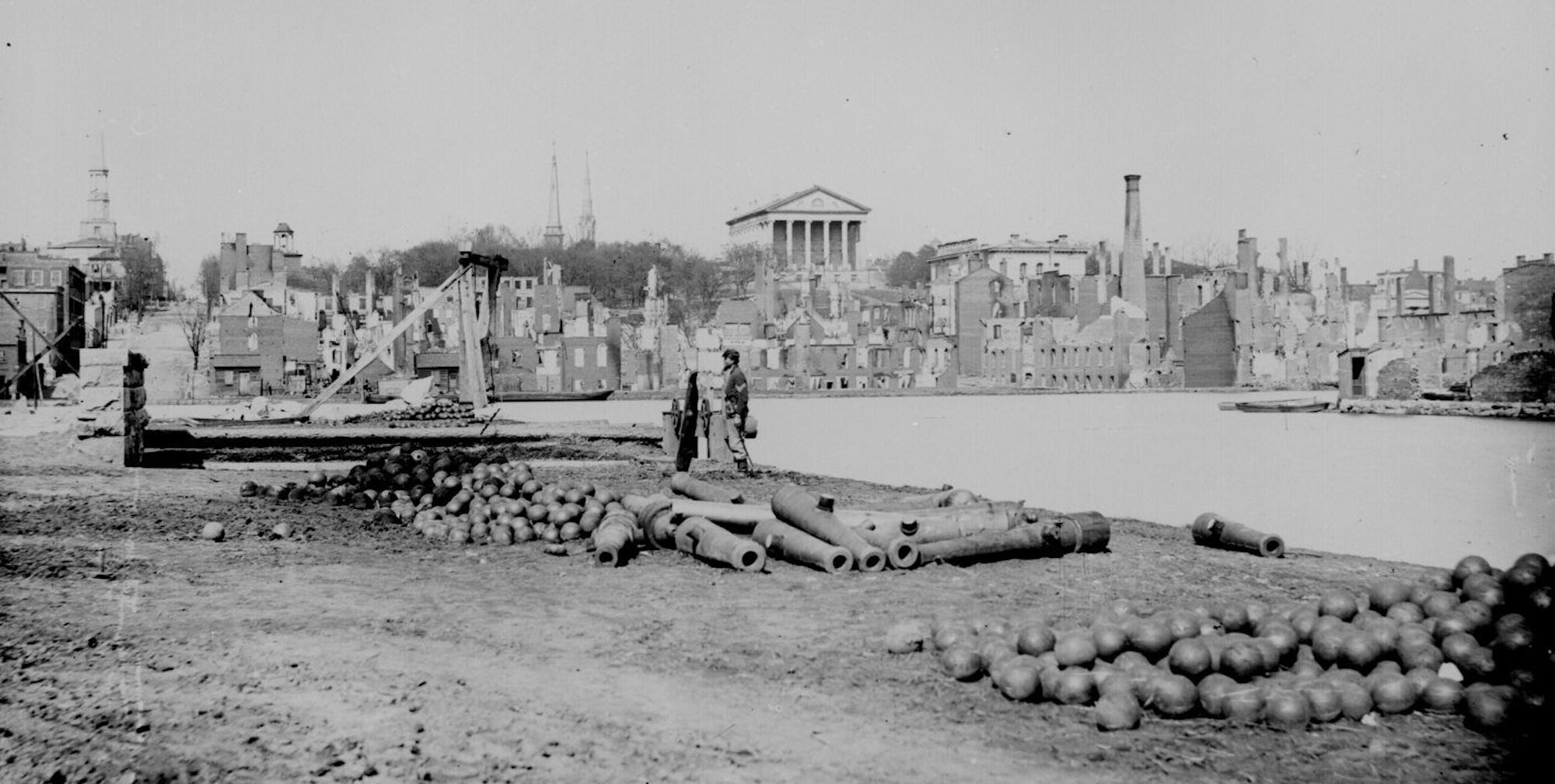
During his tenure of late October 1864-late May 1865 as lead editorial writer for the Anglo-African, James McCune Smith commented on the escalating developments of the Civil War. (Proprietor and lead editor Robert Hamilton was on another tour throughout the country to promote, fundraise, and report for the paper.) In this triumphant editorial, McCune Smith relied heavily on Biblical language and imagery to convey the widespread joy and relief in the North upon the news that Richmond, the capitol of the Confederacy, had finally fallen. For McCune Smith, its fall also sounded the death knell of American slavery and served as another great vindication of African-American soldiers’ heroic military service to help bring it about.
This is one of several editorials that’ll be published here at the World of James McCune Smith on the anniversaries of the Civil War-era events that they discuss.
~ This entry is part of my project of identifying, compiling, and editing the complete written and spoken works of James McCune Smith (1813-1865) in association with Northumbria University and funded by the British Academy. ~
Title: Richmond
Source: The Anglo-African, 8 April 1865, 2 (At Duke University Libraries)
Text:
RICHMOND.
––––•––––
“RICHMOND is ours” has flashed over the wires.[1] ‘Richmond is ours” echoes a million of loyal hearts―‘JEFF DAVIS” has fled,[2] and “LEE is flying,”[3] made the air vocal with “thoughts that breathe, in words that burn,”[4] as the news of this great victory spread along from city to city, from State to State and from ocean to ocean. No pen or tongue, no order or poet, can describe the emotions of joy that thrilled every honest bosom, as the tidings[5] of this great event spread over the land. While all rejoice the colored man has many, and peculiar reasons to “shout aloud for joy”[6]; and exclaim, what hath the God of the oppressed―the God of truth and freedom wrought? Richmond the viperous nest of serpents[7]―the sea of scorpions[8]―“the cage of unclean birds,”[9] of prey―the doomed city has fallen like Lucifer, to rise in rebellion[10] again, never―this den of iniquity[11]―the sepulchre[12] of souls―the dark tomb of the immortal mind[13]―the dreary abode of crushed hearts―where the “sighing of the prisoner”[14] and the bitter tear of anguish fell unheeded―mocked by the cruel oppressor of God’s poor[15]―that city where bloody treason against Right and Justice, and Humanity, flourished has fallen. Why should not colored men rejoice “with joy unspeakable and full of glory?”[16]
Its streets have shaken beneath the conquering tread of colored soldiers as “they went marching along,”[17] their hearts beating with patriotic and sublime emotions. How their fathers and mothers must have felt as they beheld their sons and brothers returning in triumph! What thoughts of the past, what visions of the future! as they marched by the prison―the old Bastille,[18] the slave pens, the human auction-blocks, where countless victims of despotic rage and avaricious cruelty have been outraged and wronged! That past can never return, thanks to God and “ABRAHAM, the friend of God,”[19] and humanity―to SHERMAN,[20] and SHERIDAN,[21] and GRANT,[22] and the right arm of colored men, redeemed and disenthralled by the irresistible genius of Freedom. We used to say in the old days of the Fugitive Slave Bill, that “when the African Lion should awake to battle, the oppressor would find that living thunder dwelt in his right arm.”[23] Fort Wagner,[24] Olustee, Port Hudson, Millikin’s Bend and Nashville[25] have proved this. Charleston has seen the sable heroes undaunted stand amidst their proudest monuments, and now Richmond beholds them as they “go marching along,” none daring to molest―none to make afraid. The convulsion which has smitten their throne of iniquity to the dust―the storm which has swept over their city of blood, and sent their broken legions and flying columns. They know not whither, shall purify the atmosphere, and leave it consecrated to Freedom and Humanity forever.
THANK GOD, RICHMOND IS OURS!
Let these words flash in letters of fire over the bannered host which on the 18th day of April shall march along the streets of New York.[26]
[1] Richmond, Virginia, was the capital of the Confederacy (May 1861-April 1865) during the United States Civil War. It fell to the Union on 3 April 1865 after a long siege of the city and neighbouring Petersburg by General Ulysses S. Grant’s forces. See James M. McPherson, Battle Cry of Freedom: The American Civil War (Penguin Books, 1990), 740–41, 743, 749, 751, 777–80, 800, 845–47. See also “Richmond is Ours!!!’, New York Herald, 4 April 1865.
[2] Jefferson Davis, president of the Confederacy, received the news that General Robert E. Lee’s troops must withdraw from Richmond while he was attending church there. See McPherson, Battle Cry of Freedom, 846.
[3] Local papers described the departure of Lee’s retreating forces in terms of ‘flying.’ See, for example, the New York Herald, 5 April 1865, 2; New-York Tribune, 6 April 1865, 2; and the World, 6 April 1865, 4.
[4] Oft-quoted lines from Thomas Gray’s ‘Ode V: The Progress of Poesy.―Pindaric.’ See Thomas Gray, Gray’s Letters & Poems, With a Life of the Author (W. A. Bartow, 1827), 161 (In Internet Archive).
[5] McCune Smith’s wording evokes the language of the angels’ announcement to the shepherds of the birth of Jesus Christ in Luke 2:10: ‘And the angel said unto them, Fear not: for, behold, I bring you good tidings of great joy, which shall be to all people.’ See The Holy Bible, Containing the Old and New Testaments [King James Version] (William W. Woodward, 1813) (In Internet Archive).
[6] From Psalms 132:16: ‘I will also clothe her priests with salvation; and her saints shall shout aloud for joy.’ See Holy Bible (In Internet Archive).
[7] From Jesus Christ’s admonition to the ‘hypocritic[al]’ ‘scribes and Pharisees’ – ‘Ye serpents, ye generation of vipers, how can ye escape the damnation of hell?’ in Matthew 23:33. See Holy Bible (In Internet Archive).
[8] Scorpions appear frequently in the Bible as a scourge or a chastisement. See, for example, 1 Kings 12:11, 14; 2 Chronicles 10: 11, 14; Ezekial 2:6; Luke 10:18; and Revelation 9:10. See Holy Bible (In Internet Archive).
[9] See Revelation 18:2 – ‘Babylon the great is fallen, is fallen, and is become the habitation of devils, and the hold of every foul spirit, and a cage of every unclean and hateful bird’ in Holy Bible (In Internet Archive).
[10] For a comparison of the house of Israel’s prophesied triumph against Babylonian oppression with the archangel Lucifer’s rebellion against God and exile to hell as punishment, see Isaiah 16:1-19 in Holy Bible (In Internet Archive).
[11] ‘Iniquity’ appears frequently in the King James Bible to refer to sin and wrongdoing. ‘Den of’ appears in related contexts in Jeremiah 7:11 (‘den of robbers’) and in Matthew 21:13, Mark 11:17, and Luke 19:46 (‘den of thieves.’) See Holy Bible (In Internet Archive).
[12] ‘Sepulchre’ is a term for tomb frequently used in the King James Bible.
[13] This apparently alludes to the practice of denying education to people held in slavery in the South. McCune Smith and his fellow education advocates argued that caste and slavery were inimical to the development of the mind, and that denying education to people was an offense against God and his gift of intellect to humankind. See, for example, James McCune Smith, ‘To the Editor of the Glasgow Chronicle’, Glasgow Chronicle, 18 January 1833, National Library of Scotland; James McCune Smith et al., ‘Report of the Committee on Education’, The North Star, 21 January 1848; James McCune Smith, ‘Civilization: Its Dependence on Physical Circumstances’, The Anglo-African Magazine, January 1859, 17.
[14] From Psalm 79:11: ‘Let the sighing of the prisoner come before thee.’ See Holy Bible (In Internet Archive).
[15] McCune Smith regularly used the phrase ‘God’s poor’ – likely adopted from his friend and fellow abolitionist Gerrit Smith, who frequently employed it – to refer to the impoverished and oppressed, who God commands us to care for. See Timothy Eato et al., ‘Public Meeting in New York’, The Colored American, 22 May 1841; Charles B. Ray and James McCune Smith to Gerrit Smith, 27 July 1847, Gerrit Smith Papers, Syracuse University Libraries; James McCune Smith, ‘Letter from Our New-York Correspondent’, Frederick Douglass’ Paper, 19 February 1858; James McCune Smith, ‘Obituary [Thomas Hamilton]’, The Anglo-African, 10 June 1865.
[16] From 1 Peter 1:8: ‘Whom having not seen ye love; in whom, though now ye see him not, yet believing, ye rejoice with joy unspeakable and full of glory.’ See Holy Bible (In Internet Archive).
[17] Probably from Plutarch’s ‘Life of Alexander’ as quoted and translated by Baptist minister, author, scholar, and translator Orrin B. Judd: ‘In the whole company there was not to be seen a buckler, a helmet, or spear; but all the way, the soldiers BAPTIZING with cups, flagons, and goblets, out of large casks and urns, drank to each other; some as they went marching along, and others as they were reclining at tables.’ See Orrin B. Judd, Way-Marks to Apostolic Baptism or Historical Testimonies... (Ervin H. Tripp [Printer], 1859), 53 (In Internet Archive). For a more representative English translation of these passages, see Plutarch, Plutarch’s Lives: Translated from the Original Greek, with Notes Historical and Critical, and a Life of Plutarch, vol. 3, ed. William Langhorne and John Langhorne (James Crissy, 1830), 306–7 (In Hathi Trust).
[18] The famous medieval fortress and prison in Paris was stormed and captured by revolutionaries on 14 July 1789 and destroyed soon afterwards, as they saw it as a symbol of despotism, cruelty, and slavery. See Thomas Carlyle, The French Revolution: A History (Wiley and Putnam, 1847), 1:127, 183–93, 197–99, 202–3.
[19] From the Epistle of James 2:23: ‘And the scripture was fulfilled, which faith, Abraham believed God, and it was imputed unto him for righteousness: and he was called the Friend of God.’ See Holy Bible (In Internet Archive). Here, McCune Smith applied this verse about the Hebrew patriarch Abraham to Abraham Lincoln, president of the United States, whom McCune Smith greatly admired. Lincoln toured Richmond on the same day it fell to the Union, only hours after Robert E. Lee’s forces left the city. Lincoln left Washington D.C. for a short visit the Army of the Potomac, and remained a little longer as Grant’s guest to see the pending success of the Richmond and Petersburg siege. See McPherson, Battle Cry of Freedom, 846–47.
[20] William Tecumseh Sherman was one of the most successful Union generals in the Civil War, best-known for his ‘March to the Sea.’ To further split and demoralize the Confederacy, Sherman’s forces employed scorched-earth tactics on their march from Atlanta to Savannah, Georgia. See McPherson, Battle Cry of Freedom, 198, 305, 325, 329, 345, 408–9, 577–79, 718, 722, 743–45, 748–55, 774–75, 806, 808–11, 815–16, 825–30, 857.
[21] Philip H. Sheridan was another highly successful Union general in the Civil War, also known for his scorched-earth tactics – in his case, in the Shenandoah Valley. See McPherson, Battle Cry of Freedom, 416, 519–20, 580, 718, 728, 758, 777–80, 845.
[22] After a series of success that turned the tide in favor of the Union during the Civil War, Lincoln appointed Ulysses S. Grant lieutenant general of the army – a rank recently revived by Congress and last held by George Washington – under the title General in Chief. Grant accepted Lee’s surrender on behalf of the Confederacy at Appomattox courthouse on 9 April 1865. See McPherson, Battle Cry of Freedom, 329, 332, 395–402, 406–16, 419, 423, 512, 515, 518, 577–79, 586–88, 626–38, 645–46, 676–80, 718, 720–24, 734–37, 739–43, 751, 756, 777–78, 807–8, 848–50.
[23] This or a similar quote has not been found in extant sources; the wording appears to be original to McCune Smith. ‘We’ would refer at least in part to the Committee of Thirteen, a vigilance committee that McCune Smith co-founded to help undermine and circumvent enforcement of the newly-passed Fugitive Slave Law of 1850. The Committee was only one part, however, of a larger movement to resist the Law – sometimes by exploiting legal loopholes (as the Committee tended to do), and sometimes by breaking it. See Philip A. Bell, ‘Our Boys’, The Elevator, 8 June 1872; Maritcha Remond Lyons, ‘Memories of Yesterdays: All of Which I Saw and Part of Which I Was - An Autobiography’, New York, 1929, 26, Schomburg Center for Research in Black Culture, New York Public Library; Eric Foner, Gateway to Freedom: The Hidden History of America’s Fugitive Slaves (Oxford University Press, 2015), 128, 166–67.
[24] The Battle of Fort Wagner is best known for the heroic conduct of the 54th Massachusetts Infantry, the Union Army’s first all-black regiment, in leading the assault on this well-fortified position at Charleston Harbor. The regiment suffered heavy casualties, including the death of its commander, Robert Gould Shaw. See McPherson, Battle Cry of Freedom, 84, 565, 686–87.
[25] Black troops also fought at these battles, again noted for their exemplary military conduct and heroism. See McPherson, Battle Cry of Freedom, 634, 637–38, 769, 813–15.
[26] This march did not occur; these plans would have been derailed by Lincoln’s assassination on 14 April 1865. Instead, Lincoln’s funeral procession passed through New York City on 25 April. For McCune Smith’s discussion of New York City council members’ attempts to exclude or sideline black organizations from the procession there, see ‘The Common Council’s Caste’, The Anglo-African, 6 May 1865.