
Abraham Lincoln
The Sober Second Thought of the People

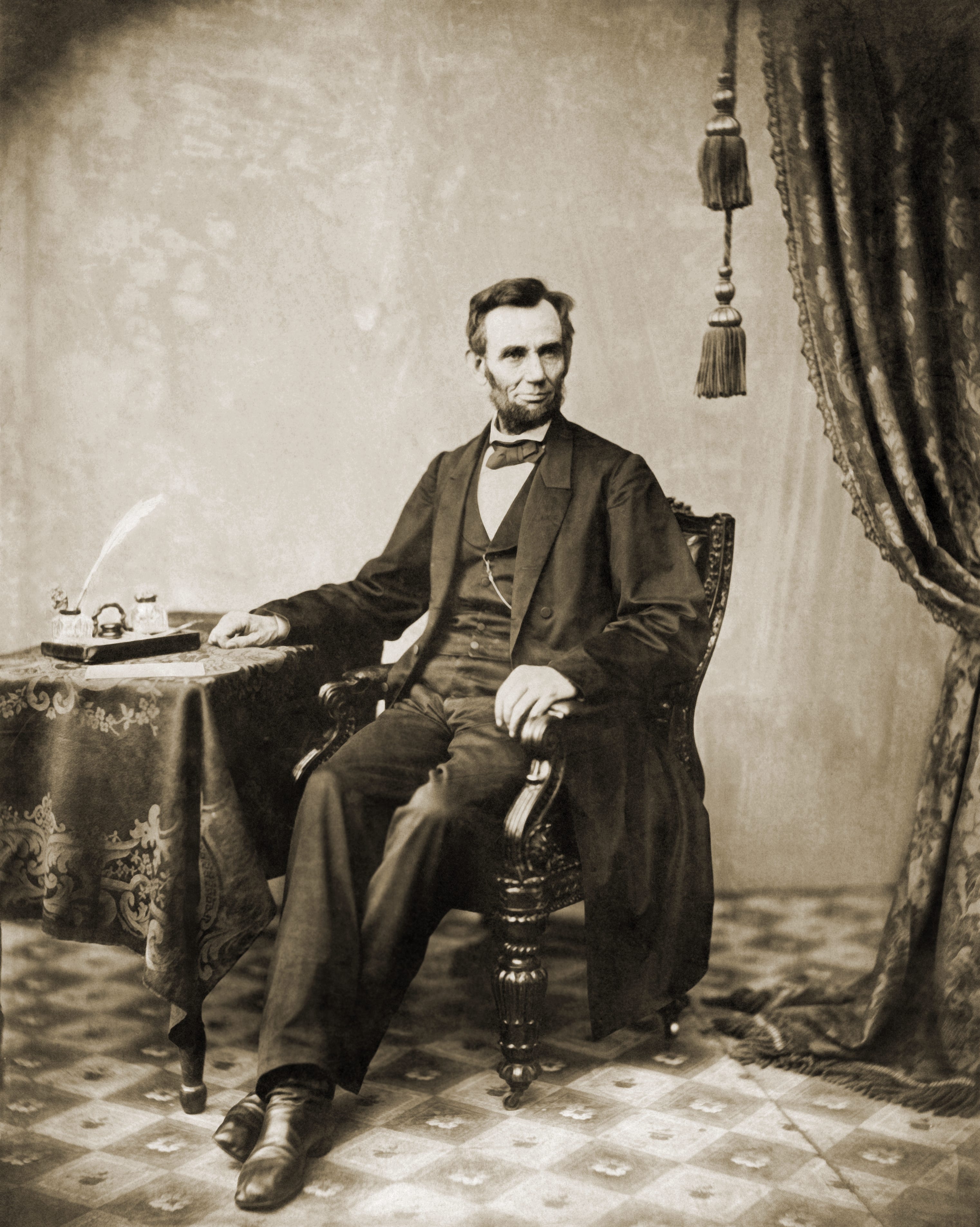
In honour of Abraham Lincoln’s birthday, here’s an editorial James McCune Smith wrote in support of Lincoln’s candidacy for a second term as President. Ever since Lincoln had signed the bill that abolished slavery in the nation’s capital on 16 April 1862, McCune Smith was his ardent and unwavering supporter, and his subsequent Emancipation Proclamation only sealed the deal for him. In this essay, McCune Smith presented Lincoln as both a leader and an avatar of the United States’ evolution from a nation rife and riven with slavery and caste to one soon to enjoy a new birth in liberty (to adapt a passage from Lincoln’s great Gettysburg Address). In McCune Smith’s account, Lincoln’s own ‘dim and perilous track from the darkness of pro-slavery to the light of liberty’ mirrored that of the nation, but it took this ‘plain homely man of the people’ to help the nation progress haltingly but inevitably in that direction.
~ This entry is part of my project of identifying, compiling, and editing the complete written and spoken works of James McCune Smith (1813-1865) in association with Northumbria University and funded by the British Academy. ~
Title: Abraham Lincoln: The Sober Second Thought of the People
Source: The Anglo-African, 5 November 1864, 2 (At Duke University Libraries)
Text:
ABRAHAM LINCOLN
–––•–––
THE SOBER SECOND THOUGHT OF THE PEOPLE.[1]
To those who have witnessed the last five or six presidential elections, the present canvass must offer a singular contrast. The enthusiasm, the noise, the magnificent processions, the gay banners, the music, the measured tread of the young men, the fury of the editors, the flare of the newspapers, in short, the thousand and one agonies which went to make up our periodical lustrum, seem almost hushed under the compressed lip, and bent brow, which betray the deeper determination of a more imminent conflict. The conflict has been about men, about spoils of office or other unimportant incidents before; it is about ideas to-day; the battle of ideas which the statesman had duly handed down to their unfortunate posterity, or had locked up in constitutions fire proof as Herring’s Safes,[2] is upon them in their utter unpreparedness to-day, and fills them with consternation, and reduces statesman to mere politicians without a principle to cling to.
So the people have been obliged to come to the rescue. They have had four years to think about it, during which they have named this man or that man as the one best fitted to handle the government for the ensuing term. Now, it has been little MAC, with his wonderful power of organizing a grand army out of chaos;[3] now it must be Fremont[4] with his dash and emancipation proclamation, now fighting Joe Hooker,[5] now Grant,[6] and lately it has been Gov. Seymour, with that gleam of African blood out of his eyes (we speak from his portrait).[7] These several preferences, these first loves, yet linger in the public heart; we have under the pres. sure of events yielded to the second sober thought―ABRAHAM LINCOLN![8]
This reliance of the people on Mr. Lincoln, we regard as a most hopeful sign of the times. Mr. Lincoln is a plain homely man of the people, one of themselves, without any meretricious adjuncts which have flattered or courted their favor. He is, moreover, a self-made man, that is, a man more indebted to his own powers of observation and induction than to the schools[9] and courts for whatever there is in him.[10]
But, his strongest hold upon the public mind, lies in this; he has during the past four years, sounded his dim and perilous track from the darkness of pro-slavery to the light of liberty, from the actual Constitution towards the made constitution of these United States.[11] And his advancement,[12] step by step, has been patent to all men, clearly in the open daylight, which has shone through the walls of the white house, through the walls of that historic chamber, clear down, away into the transparent workings of his own mind. Every fact, every argument, every impulse which has led him step by step has been seen by the whole nation by the whole world. There was no art to conceal, no effort at concealment. And this nation has not only watched these advances with deepest sympathy, it has also been dragged along the same path. It thinks with him; some not quite up to his level, some beyond it, but all with him; so that turn as they may, the second sober thought of all instinctively, inevitably center upon ABRAHAM LINCOLN! We say, therefore, that this reliance of the people on Mr. Lincoln is a hopeful sign, for it shows that they are moving with him in the right direction.
This nation required to learn anti-slavery or perish.[13] The attempt of the brilliant, eloquent, and aggressive anti-slavery host failed, for want of sympathy between teachers and those to be taught. “After twenty-five years of assault in the bastille[14] of slavery,” said Wendell Phillips, “we find it as strong to-day as at the beginning.”[15] But here comes a plain homely man in the midst of events, which he might have turned either way, and begins the study of the anti-slavery alphabet, with the nation as spectators first, fellow-learner’s[16] afterwards. It is a spectacle to which the coming historian will look back upon with deep interest, and on which he will exercise the profoundest analysis; for what would seem to be a reversal of the ordinary way of progress; the education of a race following that of a child, rather than the education of a child following that of a race. “The education of the child,” says Comte “must accord both in mode and arrangement with the education of mankind as considered historically; or, in other words, the genesis of knowledge and the individual must follow the same course as the genesis of knowledge in the race.”[17]
We do not fear that this self-taught teacher will be less able to advance during the next four years than he has proved himself to be during the last four years. Of his honest intent to abolish slavery no man can doubt. Of his sagacity there can be no question, and where that may fail him, events, his luck, his star, come to the rescue. What a storm was raised by good anti-slavery men, when the Emancipation proclamation excepted from its workings Maryland, Missouri, Kentucky, Tennessee, and parts of Louisiana, &c., &c..[18] And yet we find Maryland a free State today, Louisiana on the same track, and the other States gradually succumbing to that logic of events which will soon make them free also.[19] And so, in many other instances in which anti-slavery, pure and simple, has had apparent reason to doubt even the honesty of Mr. Lincoln’s acts or reticences,[20] he has only been a little more sagacious than they, and awaited the time when his experienced touch assured him that the public opinion would uphold him.
As it lay in his mind, we would still let him map it out, and think it out, and work it out. The nation to-day is not so won from its idols, but that some sudden disaster or danger might wean it back to them. Nay, even a step too far in absence might startle them back into the meshes of those who await them as prey; and for these reasons, the accustomed leader, the accustomed teacher, the accustomed voice must lead them on until their faith and principles are fixed too firmly to be unhinged. So let us have for President Abraham Lincoln, the second sober thought of the people.”
[1] In summer 1864, it seemed unlikely to many – including Abraham Lincoln himself – that he would be re-elected to the presidency, due largely to a lack of recent Union military successes and fear that the unresolved issue of slavery would keep the war going indefinitely. However, with the fall of Atlanta to Union forces under William Tecumseh Sherman on 2 September 1864, public support for Lincoln and the Republicans skyrocketed. Lincoln won a decisive electoral victory a few days after McCune Smith’s editorial was published. See Ronald C. White, A. Lincoln: A Biography (Random House Publishing Group, 2009), 637–38, 640–45.
[2] For a history and description of Silas C. Herring of New York’s fireproof safes, see Fighting Fire for Twenty-Six Years... Herring’s Celebrated Safes (Herring, Farrel & Sherman, 1867). (In Internet Archive)
[3] Former Union General George B. McClellan ran against Lincoln as a War Democrat. McClellan’s diminutive stature, especially compared to that of the towering president, was an object of fun to opponents of his candidacy, including political cartoonists. McClellan was initially a promising head commander, having transformed an influx of largely untrained volunteers into the well-organized, well-trained, disciplined Army of the Potomac, and winning their affection and loyalty. Lincoln eventually let the self-serving, dithering McClellan go, however, due to the latter’s unwillingness to prosecute the war vigorously. McClellan didn’t receive the support he hoped for among the army formerly under his command: soldiers voted for Lincoln over McClellan 116,887 to 37,748, even more decisively than voters in general (2,203,831 to 1,797,019). See James M. McPherson, Battle Cry of Freedom: The American Civil War (Penguin Books, 1990), 348–50, 358–65, 562, 570, 715, 753; White, A. Lincoln, 457–58, 463, 470–72, 480–86, 521, 507–8, 639–42, 644–45.
[4] As Civil War historian James M. McPherson writes, John C. Frémont was ‘a glory-hunting captain of the army topographical corps… [f]amous for his explorations of the West’ and who, when ‘rumors of war with Mexico reached the Sacramento Valley [in 1845]… took it upon himself to assist settlers in an uprising that proclaimed an independent California.’ In 1861, Lincoln appointed Frémont commander of the Union army in the Western Department. However, the ‘showy’ Frémont’s tenure saw little military success, and he regularly disregarded Lincoln’s advice and direction. On 30 August 1861, Frémont issued a proclamation that ‘declared martial law [in Missouri], announced the death penalty for guerrillas caught behind Union lines, confiscated and property and freed the slaves of all Confederate activists in Missouri,’ going well beyond an act passed by Congress earlier that month authorizing only the confiscation of slaves and property ‘used directly in the Confederate war effort.’ The proclamation and Frémont’s refusal to modify it so as not to undermine efforts to keep Kentucky in the Union led Lincoln to finally remove Frémont from his command there. The disgruntled Frémont’s presidential candidacy in the 1864 presidential election did win some support from abolitionists and radicals, but he eventually withdrew from the race. See McPherson, Battle Cry of Freedom, 49, 350, 352–54, 715–16, 776.
[5] Though his name was floated as a war-hero alternative to current front-runners, the hard-fighting, aggressively self-confident general and one-time commander of the Army of the Potomac Joseph Hooker doesn’t appear to have seriously considered a presidential run. See ‘The New Presidential Movement in Ohio - Just the Thing for the Crisis’, The New York Herald (New York), 4 August 1864; McPherson, Battle Cry of Freedom, 541–45; White, A. Lincoln, 538–40.
[6] General Ulysses S. Grant, whose decisive leadership helped turn the tide in favour of the Union and led Lincoln to appoint him lieutenant general in command of all the nation’s armies (a position last held by George Washington), was favoured by many as a potential candidate for the 1864 presidential race. However, Grant unequivocally refused to entertain running for that office. See Brooks D. Simpson, Let Us Have Peace: Ulysses S. Grant and the Politics of War and Reconstruction, 1861-1868, with Internet Archive (University of North Carolina Press, 1991), 51–54, 217.pp. 51-54, 217
[7] New York Governor Horatio Seymour’s mildly anti-slavery views led him to support Free-Soil and to hope and believe that slavery would wither away. However, he was opposed to the abolitionist movement and to Lincolns’ war and reconstruction policies. Seymour was considered as an alternative compromise Democratic candidate to frontrunners Clement Vallandigham (Peace Democrat) and McClellan (War Democrat), but Seymour declined to be nominated. McCune Smith’s suspicion that Seymour had ‘African blood’ his ancestry may have been inspired in part by Seymour’s dark eyes and dark, springy curls. See Stewart Mitchell, Horatio Seymour of New York (Harvard University Press, 1938), frontispiece, xvi-xviii, 27-28, 100-102, 202, 239-240, 355-356, 362, 364-366, 369.
[8] Lincoln wasn’t McCune Smith’s ‘second sober thought’, however –McCune Smith had been an avid Lincoln booster for some time. See ‘On Deck!’, The Anglo-African, 7 March 1863; ‘The President’s Message’, The Anglo-African, 19 December 1863; ‘Our Next President’, The Anglo-African, 24 October 1863.
[9] McCune Smith had written of the leading black American journalist and abolitionist Frederick Douglass and the pioneering Scottish geologist Hugh Miller in similar terms, in his introduction for Douglass’s second autobiography. He compared details of it to some elements from Miller’s own recently published one, titled My Schools and Schoolmasters. Both Miller and Douglass, McCune Smith argued, used their ‘uncommon memory’ and powers of observation and induction to intellectually advance far beyond what their unconventional educations might ordinarily allow. See James McCune Smith, ‘Introduction’, in My Bondage and My Freedom, by Frederick Douglass (Miller, Orton & Mulligan, 1855), xviii–xix; Hugh Miller, My Schools and Schoolmasters; Or, the Story of My Education (Gould and Lincoln, 1854).
[10] Lincoln was well-known for being largely an autodidact; relying for most of his primary and legal education on his own, self-directed efforts, which included voracious reading (occasionally guided and assisted by teachers and mentors). Lincoln was also well-known for being a deliberative, independent thinker. See White, A. Lincoln, 7, 19–20, 30–34, 53–55, 65–67, 154–55, 168, 676.
[11] In an editorial for the Anglo-African’s previous issue, McCune Smith differentiated between the ‘made’ or written Constitution, a liberty-promoting document that the United States didn’t yet live up to, versus the ‘actual’ or unwritten Constitution, which included ‘barbari[c]’ and ‘inhuma[n]’ practices like slavery and caste and laws that instituted, protected, and promoted them. See ‘”All Hail, Maryland!”’, The Anglo-African, 29 October 1864.
[12] Though Lincoln insisted that he’d always believed slavery was wrong, he didn’t advocate ending it nationally until well after the Civil War began, though he regularly expressed his personal wish for the universal end of slavery. On 22 August 1862, Lincoln could still (famously) write to Horace Greeley: ‘My paramount object in this struggle is to save the Union, and is not either to save or to destroy slavery. If I could save the Union without freeing any slave I would do it, and if I could save it by freeing all the slaves I would do it; and if I could save it by freeing some and leaving others alone I would also do that. What I do about slavery, and the colored race, I do because I believe it helps to save the Union.’ But by the end of that year, Lincoln had evidently reached the conclusion that the Union could never be preserved and the war could never end until all slaves were freed; in other words, until slavery was finally abolished throughout the land. See White, A. Lincoln, 5, 75, 130–31, 161, 169, 194–96, 199–200, 214–15, 238–40, 251–55, 260–62, 297–304, 391–94, 428, 458–59, 503–5, 510–11, 521–22, 546–47, 586, 613, 619–20, 628, 653–54, 664–65. Like his friends Frederick Douglass and Henry Highland Garnet, McCune Smith had watched Lincoln’s political career and evolving views with cautious optimism and sometimes dismay. But once Lincoln signed the bill ending slavery in the nation’s capital on 16 April 1862 and announced the Emancipation Proclamation on 22 September 1862 (signing it into law on 1 January 1863), McCune Smith joined other leading African Americans in rejoicing over the President’s transformation into an emancipator. From that time onward, McCune Smith was an enthusiastic and unwavering supporter of Lincoln’s, further rejoicing at each forward evolution in Lincoln’s anti-slavery views and action. See ‘General News’, New-York Daily Tribune (New York, NY), 13 May 1862; ‘Emancipation Jubilee’, New-York Daily Tribune (New York, NY), 12 May 1862; ‘Emancipation Jubilee. 3,500 Colored People in Council’, New-York Daily Tribune (New York, NY), 14 May 1862; ‘Emancipation Jubilee: Celebration by the Colored People of New York’, The Liberator (Boston / New York), 17 May 1862; ‘The Emancipation Demonstration at the Cooper Institute’, The Pine and Palm (Boston), 22 May 1862; James McCune Smith, ‘Frederick Douglass at Home’, The Weekly Anglo-African, 16 June 1860; James McCune Smith, ‘Frederick Douglass at the Cooper Institute’, The Anglo-African, 28 February 1863; McCune Smith, ‘On Deck, AA, 7 Mar 1863’; James McCune Smith, ‘The President’s Letter’, The Anglo-African, 12 September 1863; James McCune Smith, ‘The Perils by the Way’, The Anglo-African, 26 September 1863; McCune Smith, ‘Our Next President, AA, 24 Oct 1863’; McCune Smith, ‘President’s Message, AA, 19 Dec 1863’; White, A. Lincoln, 272–73, 492, 517–18, 531–35.
[13] McCune Smith had been arguing this for the entirely of his public life. In his 1841 lecture ‘The Destiny of the People of Color,’ McCune Smith argued that every republic in history that failed did so because of slavery, and the United States would suffer the same fate if it didn’t end it there. However, McCune Smith confidently predicted that ‘Slavery must cease and over its grave there will grow up a pure Republic.’ See James McCune Smith, The Destiny of the People of Color: A Lecture, Delivered Before the Philomathean Society and Hamilton Lyceum in January, 1841 (Published by Request, 1843), 10. (In Samuel J. May Anti-Slavery Collection, Cornell University)
[14] Spelled ‘bastile’ in the original printing, a common spelling in the American press at the time.
[15] Another source of this quote has not yet been found.
[16] Apostrophe in the original printing.
[17] This is a quote from Herbert Spencer’s 1860 treatise on education. (Spencer was an English author, scientist, and philosopher best known for applying Charles Darwin’s theory of evolution to phenomena other than speciation.) The words are Spencer’s, despite McCune Smith’s apparent attribution of the quote to the philosopher and pioneering sociologist Auguste Comte. However, Spencer attributed the ideas expressed in these passages to Comte. See Herbert Spencer, Education: Intellectual, Moral, and Physical (D. Appleton and Company, 1861), 122. (In Hathi Trust) and David Weinstein, ‘Herbert Spencer’, in The Stanford Encyclopedia of Philosophy, Summer 2024, ed. Edward N. Zalta and Uri Nodelman (Metaphysics Research Lab, Stanford University, 2024), https://plato.stanford.edu/archives/sum2024/entries/spencer/; Michel Bourdeau, ‘Auguste Comte’, in The Stanford Encyclopedia of Philosophy, Spring 2026, ed. Edward N. Zalta and Uri Nodelman (Metaphysics Research Lab, Stanford University, 2026), https://plato.stanford.edu/archives/spr2026/entries/comte/.
[18] The Emancipation Proclamation immediately freed only ‘all persons held as Slaves within any state, or designated part of a State, the people whereof shall then be in rebellion against the United States.’ The states and parts of states ‘excepted from its workings’ were allied with the Union by 1 January 1863. See Abraham Lincoln, ‘The Proclamation of Emancipation’, New-York Tribune (New York, New York), 3 January 1863. Some abolitionists – particularly English ones – argued that exceptions in the Proclamation at best didn’t affect the institution of slavery itself because, according to its logic, emancipation was just a punishment for rebellion and a miliary tactic for defeating the enemy. See ‘Avon’, ‘Our Washington Correspondence’, National Anti-Slavery Standard (New York), 3 January 1863; McPherson, Battle Cry of Freedom, 557–58; White, A. Lincoln, 532, 540.
[19] More abolitionists, including Frederick Douglass and Mary Beecher Stowe (who McCune Smith admired), agreed with McCune Smith’s reading of the Proclamation: though Lincoln was constrained regarding the national abolition of slavery (by the Constitution, ensuring victory over the Confederacy, popular fears over potential disruptions to the social order and labour market that might accompany national abolition, and so on), his Proclamation put the country on the sure and short road to national emancipation (i.e., the ‘logic of events’). The Proclamation turned the Union army into liberators wherever it operated, made slavery ever-more untenable in state after state, and garnered much more national enthusiasm for general emancipation. (‘Shall be henceforth and forever free’ reads more like a rallying cry for the spreading forces of liberty than a mere announcement of a change in legal status.) McCune Smith’s and other’s enthusiasm for the Proclamation’s ultimate liberatory implications were vindicated when states and localities started abolishing slavery or taking steps indicating they would eventually do so. See ‘Mrs. Stowe’s Reply to the Women of England’, National Anti-Slavery Standard (New York), 3 January 1863; McPherson, Battle Cry of Freedom, 557–58; White, A. Lincoln, 532.
[20] Lincoln’s tendencies to hold his tongue, to conciliate, and to bide his time until the right opportunity to act presented itself was well known. See White, A. Lincoln, 398, 402, 404–5, 407–9, 423–27. While some perceived this as weakness, indecisiveness, or a sacrificing of principle to ambition, McCune Smith portrayed these ‘reticences’ as a strength and a virtue. After all, when it came to emancipation, Lincoln’s cautious, deliberative, and tactical approach had proved effective where – as Wendell Phillips and McCune Smith observed – decades of abolitionist activism had not.
Interesting piece from McCune Smith. His intuition that Lincoln’s wise, pragmatic leadership would be needed for the four years of his second term, lest the nation fall back into darkness, seems prophetic.