
A Grave Mistake
James McCune Smith's advice for life beyond slavery

As the amendment to abolish slavery was in the process of becoming part of the United States Constitution, James McCune Smith considered ways that African Americans could realize the promise of their liberty. In this editorial – reflective, satirical, argumentative, and inspirational in turn – McCune Smith pondered the histories of slavery and other systems of oppression and unfreedom throughout the world, the lessons they might impart to African Americans going forward, and how black abolitionists may have erred in their rhetoric. McCune Smith urged African Americans not to give into the victimhood mindset – or, as Bob Marley might one day put it, to ‘emancipate [themselves] from mental slavery’ – since this could serve as a self-fulfilling prophecy. Instead, McCune Smith advised them to look to other peoples of the past who had once been enslaved or oppressed but who also, once in freedom, accomplished great things. African Americans, McCune Smith argued, were no less capable of doing likewise, and God would help them along the way.
~ This entry is part of my project of identifying, compiling, and editing the complete written and spoken works of James McCune Smith (1813-1865) in association with Northumbria University and funded by the British Academy. ~
Title: A Grave Mistake
Source: The Anglo-African, Vol. 4, No, 30, 25 February 1865, p. 2 (In Duke University Libraries)
Text:
A GRAVE MISTAKE.
––––•––––
THE greatest mistake made by our people,[1] in our[2] view of the oppression[3] under which we labor, is, that they are heavier in themselves and more difficult to be borne up against, than any ever inflicted on the human race. This was the key note of our public speakers[4] forty years ago, and is the burden of their cry to-day.
Well do we remember, in the early days of the New York Philomathean Society, when William Jeffers, John Peterson, James Fields, Daniel Elston, Philip A. Bell[5] would let go their thunders against American slavery and caste,[6] and when the elder counsels of the Vogelsangs[7], the Downings[8] and the Rev. Peter Williams[9] were vouchsafed[10] to the people, and still more recently, when the American Anti-Slavery Society (fostered into being by colored men),[11] gave for its[12] utterances, only superlatives were used when speaking of the hideous national crimes.[13] The guiltiest of living men, the guiltiest of all nations, were the American people!
These extreme views rose from two sources. First, an ignorance of history;[14] and secondly, from the American habit of exaggeration. We have the largest territory, the most immense forests,[15] the longest and wildest rivers, the bravest men, the fairest women―in short, are a little ahead of creation in all other respects, why not in our crimes also? In our special view, it would not be an oppression worth groaning about unless it were the greatest under the sun, among the whites it would not be a sin worth repenting unless the most gigantic upon record. We half expect, that had not this rebellion occurred, it would have been a safe and successful attack upon slavery to have shown that it was not the very worst form of oppression after all―a sort of half feeble imitation of more gigantic forms of vice committed in every age of the world. “The bird of freedom soaring,”[16] would have turned up its nose at such a view and set the oppressed free because the sin was not splendidly unique and gigantic.
And when the war is over, and slavery is abolished, we will have to take some such view in our fight against caste, which will survive both slavery and the war, unless, learning wisdom from the past, we identify ourselves with the phoenix which shall spring from the ashes of the Democratic party.[17]
It is needless at the present day of enlightenment to inform our readers, that white men in England, and on the Continent[18] have held each other in slavery as cruel as any which ever existed in this land, with the additional enormity of the master having the right to take the life of his slave when he chose, [19] without accountability to any court or jury. Nor need we state, that in the matter of caste, worse forms than any to which we have been subjected exist in India,[20] and until recently in Christian Europe.[21]
In the present rebellion, moreover from the very beginning, it has been charged upon the Executive that the shield or the wings of the National Eagle has left bare to the enemy the colored seamen, soldier or other prisoner of war, while it shielded the white. Looking back from to-day however to the beginning of the war, have not the white prisoners of war been treated with the same barbarism which has been meted out to the colored prisoner of war? The Libby Prison, Belle Island, Andersonville, have any worse treatment been given to colored soldiers than have been given to white at these places? [22] Could worse have been inflicted? Can anything more disgraceful be recited of these times, than that while our Union soldiers[23] (white) were deliberately starved to death our Secretary of State[24] and amiable President[25] were hob-nobbing over the mahogany,[26] treating as gentlemen the rebel Commissioners[27] on the Potomac (or James River)?[28] Talk about the patience and the endurance of the negro, we wonder that the brothers, fathers, sisters and wives of our tortured Union soldiers do not rush down to Washington “en masse”[29] and demand their kindred at the hands of the President.
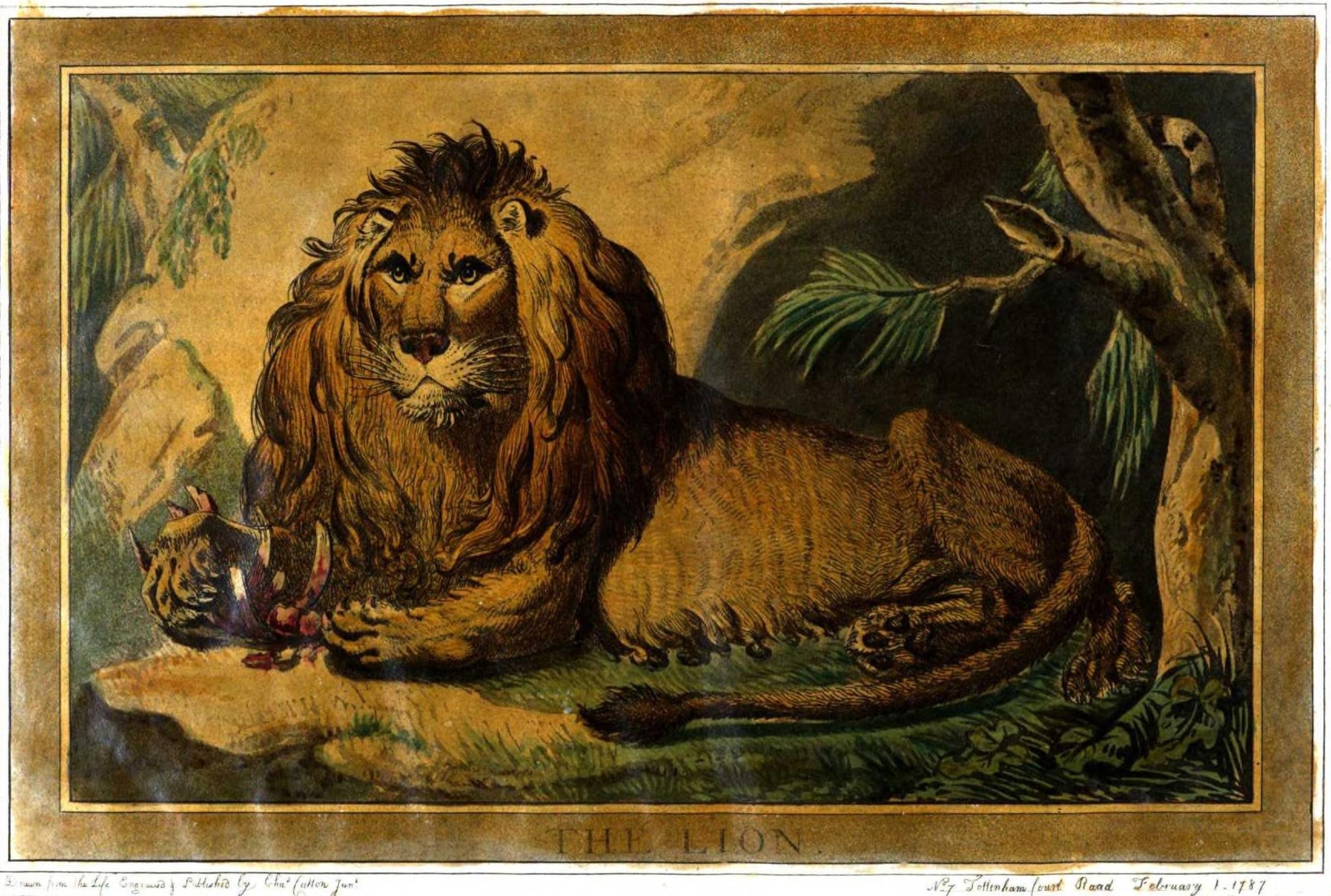
Our object in reciting these matters, is simply to remove a lion from our path.[30] To show that we are not beset by new nor insuperable barriers in our attempts at self-elevation; that such words as “there’s no use trying” should find no space in our vocabulary, no hold upon our imagination, no dampening upon our youth who should struggle up with unfettered arms and bold hearts. What others have done we can do; what others have borne, we also can endure; what others have conquered, we also can subdue; where others have soared, thither also may we direct our path, through whatever dangers or difficulties may obstruct or surround it. God tempers the wind to the shorn lamb,[31] and he fits the burden to the backs of the people who trust in Him. We have many and sure evidences that we are not forgotten by Him, and that whatever we undertake to do in the right direction, will receive His countenance and support.
[1] i.e., African Americans (or to use the terminology of the publication in which this editorial was published, Anglo-Africans).
[2] James McCune Smith’s authorship of this editorial is supported by his letter to Gerrit Smith of 17 February 1865 – ‘In regard to the Anglo-African, I must plead guilty to scribbling the leading editorial of almost every number’ – and by proprietor and lead editor Robert Hamilton’s ongoing absence from New York City (NYC), confirmed in his ‘What We’ve Seen While Drifting’ column in this, previous, and subsequent issues of the Anglo-African. McCune Smith served as the lead editorial writer – and in this and other examples, of second and third editorials – of the paper while Hamilton was away on reporting and promotional tours. For more evidence for McCune Smith’s stints as writer of anonymous editorials and other works (mostly book reviews) for the Anglo-African publications, see footnotes 1 and 3 for McCune Smith’s ‘Apology (Introductory)’ for the Magazine’s first issue (In The World of James McCune Smith).
[3] McCune Smith regularly referred to the sort of oppression that African Americans labored under as ‘caste.’ In 1859, he offered a concise definition: ‘Caste is the general term for that feature in human institutions which isolates man from his fellow man.’ (See ‘Civilization: Its Dependence on Physical Circumstances’, The Anglo-African Magazine, January 1859, 15.) In the United States, this consisted of the isolation of black Americans from their free white fellow Americans through slavery, or, in the case of those who were formally free, into second-class status through racially discriminatory laws and practices.
[4] For example, William Hamilton – leading black New Yorker and father of McCune Smith’s lifelong friends and journalistic colleagues Robert and Thomas Hamilton – argued in his 1827 address marking the commencement of emancipation in New York that ‘we were in the most abject state of slavery that can be conceived, except that of our brethren at the South, whose miseries are a little more enhanced.’ In 1828, McCune Smith’s abolitionist colleague and sometimes press interlocutor William Whipper argued that American slaveholders held their human chattel ‘in a bondage ten times as severe as the one already mentioned [‘colonial bondage’ under the English monarchy], that their fathers denounced as too ignominious to be borne by man. Yes, a race of beings only doomed to be inhabitants of this soil, by the injustice and dishonesty of their fathers who purloined our ancestors from their own country. Oh! horrible spectacle!’ And abolitionist orator, writer, and educator Maria Stewart argued in 1832 that ‘The unfriendly whites… stole our fathers from their peaceful and quiet dwellings, and brought them hither, and made bond-men and bond-women of them and their little ones; they have obliged our brethren to labor, kept them in utter ignorance, nourished them in vice, and raised them in degradation.’ See Dorothy Porter Wesley, ed., Early Negro Writing, 1760-1837 (Black Classic Press, 1995), 97, 114, 135 (In Google Books).
[5] On 26 October 1830, a gathering of black New York youth and young men in McCune Smith’s social circle founded a new literary and self-improvement organization, the Philomathean Society. Its founders – many or most alumni of the African Free School – included students, apprentices, and young men already working on their own. They sought to transcend hurdles to higher achievement in the racially discriminatory society of their day by supporting one another in expanding their abilities and offering more opportunities for others to do so. The Society’s founders include minister and educator John Peterson; James Fields, who became a professional scholar after losing a leg to physician malpractice in his early teens; tinsmith Ransom F. Wake; shoemaker Robert Banks; and Thomas Sydney, who was active in many efforts to improve African American life but died young. The Society quickly began to attract new members, including aspiring clergymen Isaiah DeGrasse and Alexander Crummell, budding newspaperman and intelligence agent Philip A. Bell, physician John Brown, hairdresser Robert Cromwell, bootmaker Daniel J. Elston, and McCune Smith, then still in his teens. (Known sources reveal little about William Jeffers.) Most or all of these Philomatheans remained friends for life. Like its rival association in Philadelphia, the Society featured debates, lectures, orations, and essay contests. Its annual public events featured addresses and speeches by members and distinguished guests, recitations of inspiring texts, and readings of prize-winning essays. See Longworth’s American Almanac, New-York Register, and City Directory (Thomas Longworth, 1830), 113, 211, 613; ‘Our Colored Brethren in the City of New-York...’, The Liberator, 4 June 1831; ‘To the Public’, The Colored American, 29 April 1837; The New-York City Directory, for 1842 and 1843 (John Doggett, 1842), 110; James McCune Smith, ‘From Our New York Correspondent’, Frederick Douglass’ Paper, 16 February 1855; Philip A. Bell, ‘Men We Have Known - Number Four: Dr. James Fields’, The Elevator, 12 June 1868; Philip A. Bell, ‘Obituary [for Robert G. Cromwell]’, The Elevator, 27 November 1868; Rhoda Golden Freeman, The Free Negro in New York City in the Era Before the Civil War, Studies in African American History and Culture (Garland Publishers, 1994), 320; Carla L. Peterson, ‘Antebellum Literary Societies, Polite Learning, and Traditions of Modernity’, in African American Literature in Transition: 1830-1850, ed. Benjamin Fagan, African American Literature in Transition (Cambridge University Press, 2021), 14–15, 17–19; ‘Philomathean Society’, The Liberator, 10 December 1831; Gardner Jones, ‘Annual Exhibition of the New-York Philomathean Debating Society’, The Liberator, 4 August 1832; ‘Plutarch’, ‘New-York Philomathean Society’, The Emancipator, 21 October 1834.
[6] The speeches and essays produced by these members of the Philomathean Society during its early years are apparently lost to history.
[7] The Vogelsangs were prominent among NYC’s black community; Peter Vogelsang, Sr was an abolitionist orator and active in many efforts to improve prospects and conditions for African Americans, including religious and educational projects. (The ‘s’ at the end of ‘Vogelsang’ was apparently dropped in the original printing of this essay.) McCune Smith and Peter Vogelsang, Jr (like Vogelsang, Sr) were fellow parishioners and leading members of St Philip’s Episcopal Church, co-members of many institutions – including the New-York African Society for Mutual Relief – and worked together in many causes. See ‘An Appeal, From the Rector, Churchwardens, and Vestrymen of St. Philips’s Church’, The Evening Post, 16 May 1836; ‘To the Public - In View of the Safe and Happy Arrival...’, The Colored American, 23 September 1837; ‘Colored Schools’, The Colored American, 26 January 1839; ‘Great Anti-Colonization Meeting in New York’, The Emancipator, 17 January 1839; McCune Smith, ‘NY Corr.,’ FDP, 16 Feb 1855; John Jay Zuille, Historical Sketch of the New York African Society for Mutual Relief (New York African Society for Mutual Relief, 1892), 5, 18, 31–33, 38, 41–42; Freeman, Free Negro, 26, 30, 97; Leslie M. Harris, In the Shadow of Slavery: African Americans in New York City, 1626-1863 (University of Chicago Press, 2003), 182; Carla L. Peterson, Black Gotham: A Family History of African Americans in Nineteenth-Century New York City (Yale University Press, 2011), 166, 168, 265–67.
[8] McCune Smith was especially closely connected to the Downing family throughout his life. (An extraneous apostrophe was added to ‘Downings’ in the original printing.) Thomas Downing, a fierce yet eminently practical promoter of African Americans rights and opportunities, was the owner of a successful oyster restaurant and catering business. (His business was so renowned that he was chosen to supply the oysters for the grand fete welcoming Charles Dickens and his wife to NYC in 1842. See ‘Charles Dickens’, New-York Tribune, 14 February 1842; Philip Hone, The Diary of Philip Hone, 1828-1851 (Arno Press and the New York Times, 1970), 1 & 2:586–87.) Thomas and his wife Rebecca’s son George T. Downing (a successful businessman in his own right) and McCune Smith were fellow African Free School alumni, members of the Philomathean Society, and lifelong friends and colleagues. They worked closely on many efforts to promote African American freedom and opportunities, including education, employment, suffrage, self-improvement, and equal access to transportation and other public accommodations. As co-founding members of the Committee of Thirteen, McCune Smith and Downing helped refugees from slavery circumvent enforcement of the Fugitive Slave Law of 1850, and were implacably and very vocally opposed to expatriation of African Americans via organized emigration and colonization projects. McCune Smith and Downing, as fellow correspondents to Frederick Douglass Paper, also discussed and debated topics of major concern with one another in its pages, contributing richly to the sometimes pugnacious but always vibrant African American public discourse of the day.
See ‘A Library for the People of Color’, New-York Daily Tribune, 4 August 1843; James McCune Smith et al., ‘Report of the Committee on Education’, The North Star, 21 January 1848; Manual of the Board of Education of the City and County of New York (William C. Bryant & Co., 1849), 180; ‘Great Anti-Colonization Mass Meeting of the Coloured Citizens of the City of New York’, National Anti-Slavery Standard, 3 May 1849; ‘American League of Colored Laborers’, The North Star, 13 June 1850; James McCune Smith et al., ‘To the People of the State of New York’, The Evening Post, 23 October 1850; ‘Negro Convention in New York’, New York Daily Herald, 18 March 1851; ‘Colored Brotherhood: Facts About the Odd Fellows of African Descent’, The Philadelphia Inquirer, 4 October 1886; Harris, Shadow of Slavery, 239, 272; Peterson, Black Gotham, 64–65, 101, 103, 119, 123, 133, 168–69, 183–87, 194–95, 275; Amy M. Cools, ‘The Life and Work of Dr. James McCune Smith (1813-1865)’ (PhD thesis, University of Edinburgh, 2021), 2, 19, 22, 40–41, 44, 48–49, 51, 83, 93, 183, 205, 304, https://era.ed.ac.uk/handle/1842/38333.
[9] McCune Smith’s mentor and pastor Peter Williams, Jr, worked closely with Peter Vogelsang, Thomas Downing, and other leading black New Yorkers on projects to improve the lives of African Americans; see primary sources in the footnotes for the Vogelsangs and Downings above and Freeman, Free Negro, 4–5, 23–24, 26, 147, 240, 289–91; Harris, Shadow of Slavery, 84, 121, 128, 142, 174–75, 187; Peterson, Black Gotham, 64–65, 69–71, 75–76, 100; Cools, ‘Life and Work’, 22–25, 27–28, 35–36, 110–11, 115, 134, 193–94.
[10] These public ‘counsels’ of Peter Vogelsang and Thomas Downing are likewise apparently lost to history. Few of Williams’s survive; see An Oration on the Abolition of the Slave Trade; Delivered in the African Church in the City of New-York, January 1, 1808 (Printed by Samuel Wood, 1808); Discourse Delivered in St. Philip’s Church, for the Benefit of the Coloured Community of Wilberforce in Upper Canada, on the Fourth of July, 1830 (Printed by G. F. Bunce, 1830); ‘Rev. Mr. Williams, to the Citizens of New-York’, The Liberator, 19 July 1834.
[11] In 1855, McCune Smith’s remarks as NYC correspondent for Frederick Douglass’ Paper sparked a debate with Oliver Johnson, editor of the National Anti-Slavery Standard, mouthpiece of the American Anti-Slavery Society (AASS). McCune Smith argued that the AASS had largely lost its connection with African Americans, whom it had originally relied upon for labor and support, because it had come to focus too much of its funds and attention on white abolitionists, whose ideas, interests, and sentiments often diverged widely from African Americans’. For McCune Smith’s multi-part account of these developments, see ‘From Our New York Correspondent’, Frederick Douglass’ Paper, 26 January 1855; ‘NY Corr., FDP, 16 Feb 1855’; ‘From Our New York Correspondent’, Frederick Douglass’ Paper, 11 May 1855. See also James McCune Smith, ‘From Our New York Correspondent’, Frederick Douglass’ Paper, 15 December 1854; James McCune Smith et al., ‘Jas. McCune Smith vs. the Standard’, National Anti-Slavery Standard, 13 January 1855; Oliver Johnson et al., ‘Jas. M’Cune Smith vs. the Standard’, Frederick Douglass’ Paper, 19 January 1855; Frederick Douglass, ‘Communipaw and the American A.S. Society’, Frederick Douglass’ Paper, 18 May 1855.
[12] Misspelled ‘thits’ in the original printing. Alternatively, ‘thits’ may appear where words were dropped, which would explain why this long sentence reads awkwardly.
[13] For representative examples, see passages in speeches by Edmund Quincy, Gerrit Smith, and Alvan Stewart at the 1838 annual meeting and the destiny of the American Anti-Slavery Society, the first which McCune Smith attended and addressed, in Fifth Annual Report of the Executive Committee of the American Anti-Slavery Society: With the... Speeches Delivered at the Anniversary Meeting on the 8th May 1838 (William S. Dore [Printer], 1838), 24, 32, 39 (In Internet Archive).
[14] In a rare surviving early speech, McCune Smith’s beloved pastor and mentor Peter Williams, Jr displayed the kind of ignorance – or, at least, rhetorical downplaying – of the world history of slavery that McCune Smith alluded to here. In 1808, Williams argued that ‘Before the enterprising spirit of European genius explored the western coast of Africa, the state of our forefathers was a state of simplicity, innocence, and contentment.’ Williams went on to paint a picture of how piratical Europeans compelled, tricked, and bribed the previously ‘harmless’ and ‘harmon[ious]’ Africans into ‘grant[ing] the Europeans, their prisoners of war, and convicts, as slaves.’ See Oration on the Abolition of the Slave Trade, 12–17 (In Hathi Trust). But in 1861, in the context of opposing a scheme to facilitate African American emigration to Africa, McCune Smith argued that the historical record actually suggested a very different causal relationship when it came to the transatlantic slave trade and American slavery: ‘We may here remark that had it not been for the existence of negro slavery in Africa, there never would have been negro slavery in America. It is perfectly true that slave-traders by rum, gunpowder and guile, have excited and kept up wars in Africa, which have resulted in the capture and sale of slaves. But the condition of slavery in Africa ante-dated thousands of years the advent of the American slave-trader, and formed the groundwork on which he founded his damnable traffic. And the great negro race has itself to blame in the first instance for the cruelest of punishments which has been inflicted on a portion of the same.’ See ‘A Pilgrimage to My Motherland [Book Review]’, The Weekly Anglo-African, 19 January 1861. In fact, the continuing practice of slavery and slave-trading in Africa was part of the reason McCune Smith opposed all organized efforts to expatriate African Americans there. He held that slavery should be equally opposed and uncompromised with wherever it occurred. See ‘African Colonisation - The Other Side [With Prefatory Note]’, National Anti-Slavery Standard, 28 August 1851; ‘Emigration: To the Reverend Henry Highland Garnet [2]’, The Weekly Anglo-African, 12 January 1861; ‘Professor Campbell and That Treaty, &c.’, The Weekly Anglo-African, 26 January 1861; ‘Official Report of the Niger Valley Exploring Party. By M.R. Delany, Chief Commissioner to Africa. New York: Thomas Hamilton, 48 Beekman Street. London: Webb, Millington & Co., Fleet Street [Book Review]’, The Weekly Anglo-African, 5 October 1861. Over the years, McCune Smith also wrote of other peoples held in slavery all over the world and throughout human history, with slaves and enslavers being of every complexion (and often the same as one another). See text and footnotes above and below, and The Destiny of the People of Color: A Lecture, Delivered Before the Philomathean Society and Hamilton Lyceum in January, 1841 (Published by Request, 1843), 4–6, 10 (In Samuel J. May Anti-Slavery Collection, Cornell University); A Lecture on the Haytien Revolutions; With a Sketch of the Character of Toussaint L’Ouverture. Delivered at the Stuyvesant Institute, (For the Benefit of the Colored Orphan Asylum,) February 26, 1841 (Colored Orphan Asylum, 1841), 4–7 (In Internet Archive); ‘The Liberty Party (From the Northern Star)’, The Liberator, 28 June 1844 (In Fair Use Repository).
[15] A comma after ‘forest’ does not appear in the original printing.
[16] Birdofredum Sawin (‘bird of freedom soaring’) is a fictional author of letters in verse in American Yankee dialect featured in the ‘Biglow Papers’, created by abolitionist poet, critic, and humourist James Russell Lowell. The first series of the ‘Papers’, first compiled, edited, and published in book form in 1848, satirized the Mexican-American War of 1846. Lowell wrote a second series satirizing the Civil War starting in 1862 for the Atlantic Monthly. See James Russell Lowell, The Biglow Papers, 4th edn (John Camden Hotten, 1864); Arthur Voss, ‘Backgrounds of Lowell’s Satire in “The Biglow Papers”’, The New England Quarterly 23, no. 1 (1950): 47–64. McCune Smith likely used this allusion to the satirical character Sawin to highlight this paragraph’s own satirical nature.
[17] This may be an allusion and/or comparison to the Republican Party’s rise from the ashes of the old Whig Party – McCune Smith had been a Whig until he tired of the party’s inconsistency on slavery – and the possible similar emergence of a new party from the wreck of the Democratic one in the aftermath of the Civil War, which black Americans might likewise turn to due to Republicans’ split over enforcing black rights. See Henry Highland Garnet, ‘James McCune Smith, M. D. - Number II [From the National Watchman]’, Emancipator (New York), 15 September 1847; ‘James McCune Smith to Gerrit Smith, 12 May 1848’, n.d., Gerrit Smith Papers, Syracuse University Libraries; Philip A. Bell, ‘The Cowardice of Republicanism’, The Elevator (San Francisco, CA), 8 May 1868; Van Gosse, The First Reconstruction (University of North Carolina Press, 2021), 401, 418, 467–68.
[18] In 1844, McCune Smith had written that ‘the system of slavery can exist, independently of the [Afric-American] slave trade. In Russia, and, until very recently in Scotland, Poland and other European States, slavery, and the severest forms of slavery, exist without the slave trade.’ See ‘Liberty Party, Liberator, 28 Jun 1844’. (In Fair Use Repository) And in 1850, McCune Smith wrote that the ‘absolute condition of the mass of the Russians, is slavery.’ See ‘The Influence of Climate on Longevity: With Special Reference to Life Insurance [Part I]’, The Merchants’ Magazine and Commercial Review, Conducted by Freeman Hunt 14, no. April 1846 (1846): 329. (In Internet Archive) McCune Smith may also have read Polish-American émigré Count Adam Gurowski’s recent history of slavery throughout the world. See Adam G. De Gurowski, Slavery in History (A. B. Burdick, 1860).
[19] Gurowski wrote that among the Germanic tribes, for example, ‘The schalks [i.e., slaves] were more absolutely in the power of their master than were the Roman slaves under the empire, or even, if possible, than the chattels of the American slave states. Although Tacitus says that masters killed their slaves only when intoxicated or otherwise maddened with passion, the barbarian codes and other historic evidence show that the schalks were treated with the utmost cruelty, and even subject to be maimed in various ways.’ See De Gurowski, Slavery in History, 185.
[20] McCune Smith had alluded to the Indian caste system when discussing the general conditions which promote the development of civilization in an 1859 essay: ‘the varieties of mankind who have advanced European civilization to its present height, are offsprings from the same stock than now wanders over the steppes of Asia, or are petrified into the barbaric castes of India.’ See ‘Civilization, AAM, Jan 1859’, 13 (In Hathi Trust). When he wrote this, McCune Smith may have had a passage from historian Henry Thomas Buckle in mind: ‘For in India, slavery, abject, eternal slavery, was the natural state of the great body of the people; it was the state to which they were doomed by physical laws utterly impossible to resist.’ See Henry Thomas Buckle, History of Civilization in England (John W. Parker and Son, 1857), 1:73. McCune Smith had cited this work in ‘On the Fourteenth Query of Thomas Jefferson’s Notes on Virginia’, The Anglo-African Magazine, August 1859, 237.
[21] According to Buckle, ‘In England, slavery, or villenage, as it is mildly termed… was extinct by the end of the sixteenth century. In France, it lingered on two hundred years later, and was only destroyed in that great Revolution by which the possessors of ill-gotten power were called to so sharp an account.’ See Buckle, History of Civilization in England, 1:577.
[22] Rations were often scarce and conditions harsh for all Union prisoners of war held at the Confederate POW camps Libby and Belle Isle near Richmond, Virginia, though black prisoners of war were sometimes singled out for the most distasteful, difficult, or dangerous tasks. In some cases, however, captured free black soldiers fared as well or better than their white counterparts given Union generals’ and black solders’ threats of retaliation through singling out Confederate POW’s for like treatment. As Civil War historian James M. McPherson writes, the POW camp at Andersonville, built in southwest Georgia in early 1864 to accommodate the overflow from Belle Isle, ‘became representative in northern eyes of southern barbarity’ towards all prisoners as overcrowding, ‘disease, starvation, and brutality’ escalated the fastest there. By the summer of 1864, over a hundred POWs were dying every day at Andersonville; by the time it was shut down, about 13,000 out of Andersonville’s 45,000 prisoners ‘died of disease, exposure, or malnutrition.’ See Battle Cry of Freedom: The American Civil War (Penguin Books, 1990), 795–96. (McCune Smith also cited the horrors of Libby Prison and Belle Island in ‘Lee’s Surrender - Peace’, The Anglo-African, 18 April 1865 [In The World of James McCune Smith].)
[23] The sentence as originally printed includes the singular phrase ‘Union soldier’; the ‘s’ is inserted here since ‘were’ suggests the pluralizing ‘s’ was dropped in error.
[24] The US Secretary of State was former New York governor and Republican Senator William H. Seward. McCune Smith regularly criticized Seward, whom he had once admired, for actions and words that he believed compromised Seward’s anti-slavery principles. See ‘A Flagrant Prostitute’, Frederick Douglass’ Paper, 6 August 1852; James McCune Smith to Gerrit Smith, 1/31 March 1855, Gerrit Smith Papers, Syracuse University Libraries; ‘Horoscope’, Frederick Douglass’ Paper, 7 March 1856; ‘Letter from Our New-York Correspondent’, Frederick Douglass’ Paper, 19 February 1858; ‘Mr. Editor’, Frederick Douglass’ Paper, 16 April 1858.
[25] Though McCune Smith admired, praised, and vigorously supported Abraham Lincoln (see, for example, ‘The President’s Letter’, The Anglo-African, 12 September 1863; ‘Our Next President’, The Anglo-African, 24 October 1863; ‘Abraham Lincoln: The Sober Second Thought of the People’, The Anglo-African, 5 November 1864; ‘“Thy Will Be Done”’, The Anglo-African, 22 April 1865.), McCune Smith was also willing to criticize Lincoln when he believed he was in error, or at least to suggest that Lincoln could do more or better. (See footnote below for Lincoln’s recent ‘hob-nobbing’ with Confederate leaders that McCune Smith disapproved of here.) However, McCune Smith tended to be sparing and gentle in his criticisms of Lincoln. See also ‘Frederick Douglass at Home’, The Weekly Anglo-African, 16 June 1860; ‘Massachusetts’, The Anglo-African, 12 December 1863; ‘The New Year’, The Anglo-African, 31 December 1864.
[26] ‘Mahogany’ was a colloquial term for a dining room table, from the wood that was a popular material for elegant furniture. See John Russell Bartlett, Dictionary of Americanisms: A Glossary of Words and Phrases Usually Regarded as Peculiar to the United States, 3rd edn (Little, Brown and Company, 1860), 260; Eric Partridge, A Dictionary of Slang And Unconventional English (Routledge & Kegan Paul Ltd, 1937), 505.
[27] McPherson writes: ‘Hoping to discredit the peace movement [in the Confederate Congress] by identifying it with humiliating surrender terms, [Confederate President Jefferson] Davis appointed a three-man commission to consisting of prominent advocate of negotiations [with the Union]: Vice-President [Alexander] Stephens, President pro tem of the Senate Robert M. T. Hunter, and Assistant Secretary of War John A. Campbell, a former U.S. Supreme Court justice. Their proposed conference with William H. Seward, whom Lincoln had sent to Hampton Roads to meet with them, almost aborted because of the irreconcilable differences between [their] agendas… But after talking with Stephens and Hunter and becoming convinced of their sincere desire for peace, [Union] General [Ulysses S.] Grant telegraphed Washington that to send them home without a meeting would leave a bad impression. On the spur of the moment Lincoln decided to journey to Hampton Roads and join Seward for a face-to-face meeting with the Confederate commissioners.’ The meeting failed to accomplish either side’s objectives. See McPherson, Battle Cry of Freedom, 822–24.
[28] Hampton Roads, where Lincoln and Seward met with the Confederate commission, is a body of water at the mouth of the James River to the west and Chesapeake Bay to the north. The meeting took place on the steamboat River Queen. According to marine engineer George W. Murdock’s historical article on the vessel, the ‘“River Queen” was originally built for service in and about New York waters but she was soon chartered by the federal government and placed in service as General Grant’s private dispatch boat on the Potomac river during the last year of the Civil War.’ The steamboat’s connection to the Potomac River – which empties into the Chesapeake – and the meeting place at the estuary of the James would explain McCune Smith’s apparent uncertainty over which river to associate with the meeting. See George W. Murdock, ‘Hudson River Steamboats: No. 82―River Queen’, The Daily Freeman, 7 March 1939; McPherson, Battle Cry of Freedom, 822.
[29] French for ‘in a body’. See David E. Macdonnel, A Dictionary of Select and Popular Quotations... Taken from the Latin, French, Greek, Spanish and Italian Languages (A. Finley, 1824), 76 (In Internet Archive).
[30] See Proverbs 26:13: ‘The slothful man saith, There is a lion in the way; a lion is in the streets.’ The Holy Bible, Containing the Old and New Testaments [King James Version] (William W. Woodward, 1813). (In Internet Archive.) (Thanks to reader Adam Rose for alerting me to the biblical origin of this imagery, which I had overlooked in the original footnote.) McCune Smith had used the imagery of a lion in the path several years previously in an article as New York City correspondent for Frederick Douglass’ Paper: ‘the terms “negro” and “black man,” have been lions in the pathway of our progress. We are tender footed in regard to them. We wince under them.’ See ‘From Our New York Correspondent’, Frederick Douglass’ Paper, 25 March 1859. In both instances, McCune Smith used the imagery of the lion as a self-imposed mental impediment on the road to progress.
[31] ‘God tempers the wind to the shorn lamb’ was an oft-used quotation from Laurence Sterne’s 1768 novel A Sentimental Journey, lightly edited from the original. See Laurence Sterne, The Works of Laurence Sterne, A.M. (1775), 7:138 (In Internet Archive) and L. C. Gent, The Book of Familiar Quotations (London, Whittaker & Co., 1860), 218 (In Internet Archive).
So glad to see the shout out to Bob Marley!
Just discovered your incredible work here! Amazing stuff. Rereading David Walker's APPEAL at the moment and this was interesting to read in light of Walker's text.
PS: came here while searching for an 1850s (I believe) reference I think I remember Smith making regarding Black wage laborers and slavery in the north. Can't seem to locate it, any ideas or am I just imagining this source?